
Furnished vs. Unfurnished Bernedoodles: How We DNA Test Every Litter (Breeder Breakdown Series, Episode 5)

Breeder Breakdown Series, Episode 5: How do we test for furnishings and why does it matter?

When families begin researching an Ultra Bernedoodle, one of the most important decisions they face is whether a furnished or unfurnished Bernedoodle is the right fit for their household.
Furnishings affect far more than a puppy’s appearance. They influence coat development, grooming requirements, allergy considerations, and Bernedoodle shedding. Because a litter can include both furnished and unfurnished puppies, families deserve accurate information before committing to a puppy.
At Central Wisconsin Bernedoodles, we use DNA testing to identify furnishings when a litter has the potential to produce both coat types. We also visually confirm the results as the puppies mature. Here is how that process works and why it matters.
Contents
What Are Furnishings in a Bernedoodle?
“Furnishings” refers to the longer facial hair that creates the familiar shaggy eyebrows, beard, and teddy-bear appearance associated with many Bernedoodles.
A puppy’s furnishing genetics can be described in three general categories:
Fully furnished: Two copies of the furnishing gene
Furnished: One copy of the furnishing gene
Unfurnished: No copies of the furnishing gene
Furnished and fully furnished Bernedoodles generally have longer hair on the face and paws. They typically require regular brushing and professional grooming but usually experience less shedding.

An unfurnished Bernedoodle has smooth, shorter hair on the face and paws. Its coat is generally easier to maintain, but it will shed more than a furnished Bernedoodle.
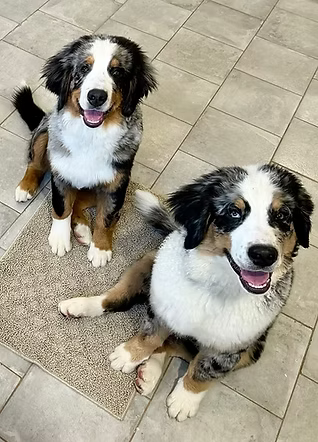
What Is an Unfurnished Bernedoodle?
An unfurnished Bernedoodle does not inherit a copy of the furnishing gene. Instead of developing the traditional shaggy doodle face, the puppy will usually have a smoother muzzle and an appearance that more closely resembles a Bernese Mountain Dog.
Many families are intentionally drawn to the unfurnished look, especially those who love the appearance of a Bernese Mountain Dog but want some of the potential benefits of a thoughtfully bred Bernedoodle.
An unfurnished coat typically requires:
Less professional grooming
Less frequent brushing
Easier day-to-day coat maintenance
Greater tolerance for a natural, lower-maintenance appearance
However, an unfurnished Bernedoodle will shed. Families considering this coat type should be comfortable with routine hair loss and seasonal shedding.
What Is an Ultra Bernedoodle?
An Ultra Bernedoodle is a Bernedoodle with a higher percentage of Bernese Mountain Dog genetics than many traditional Bernedoodle crosses.

These dogs are bred with the goal of preserving more of the Bernese Mountain Dog’s structure, appearance, and temperament while maintaining the benefits of genetic diversity. Depending on the pairing, an Ultra Bernedoodle litter may produce furnished, fully furnished, and unfurnished puppies.
The term “Ultra Bernedoodle” does not describe one specific coat type. An Ultra Bernedoodle can be furnished or unfurnished, so families should not rely on the cross or breed percentage alone to predict appearance or shedding.
The furnishing genetics are usually more important than the dog’s Bernese Mountain Dog percentage when determining how its face and coat will develop.
Can You Identify Furnishings When Puppies Are Born?
Not reliably.
When a litter is born, the puppies generally look very similar in terms of coat texture. A breeder may notice small differences in curl or wave, but those differences are not enough to accurately determine which puppies are furnished and which are unfurnished.
Even puppies with the same furnishing status can have different coat textures. A furnished puppy may have a very straight coat, while another furnished puppy may develop a noticeably wavier coat.
When a litter has the potential to produce both coat types, DNA testing is the only reliable way to identify furnishings during the puppies’ earliest weeks.

How We DNA Test for Furnishings
A few days after the puppies are born, we collect DNA samples by gently swabbing the inside of each puppy’s cheek.
Collecting samples from newborn puppies requires patience and care. Very young puppies have fewer cheek cells available, and they nurse frequently. Because nursing can potentially transfer cells between the mother and her puppies, we separate the puppies from Mom for a short period before collecting the samples.
After collection, we send the swabs to a laboratory using expedited shipping. Once the laboratory receives and processes the samples, results usually arrive within four to five business days. The entire process generally takes approximately two weeks from birth.
The results identify which puppies are:
Fully furnished
Furnished
Unfurnished
Once those results arrive, we can begin matching the appropriate puppies with families waiting for each coat type.
Why We Visually Confirm the Results
DNA testing provides valuable information, but testing errors can happen. Samples from very young puppies may contain insufficient DNA or become contaminated, and occasionally a result does not align with the puppy’s developing appearance.
Furnishings usually become visibly apparent when puppies are approximately four to five weeks old. At that stage, we compare each puppy’s physical development with its laboratory result.
If a result appears questionable, we collect another sample and test the puppy again. We would rather retest and reconfirm than provide a family with inaccurate information.
A very straight coat does not automatically mean a puppy is unfurnished. We have produced furnished Ultra Bernedoodles with exceptionally straight coats and little or no curl. This is why we consider both the DNA results and the puppy’s visible development.

How Furnishing Results Affect Our Waitlist
Before a mixed-coat litter is born, we know the statistical likelihood of furnished and unfurnished puppies. We do not, however, know exactly how many of each coat type will arrive.
Genetics do not always follow the predicted percentages. A litter expected to produce equal numbers of furnished and unfurnished puppies may produce a very different distribution.
When the puppies arrive, we contact a limited number of families from our Master List and invite them to begin following the litter tentatively. These families can join the private litter group, view daily updates, see weekly photographs, and begin preparing while we wait for the DNA results.
Once the results arrive, we treat the furnished and unfurnished puppies as two separate groups:
Families waiting for a furnished puppy select from the furnished puppies.
Families waiting for an unfurnished Bernedoodle select from the unfurnished puppies.
Selection positions are offered according to Master List order.
We continue contacting families until every available position is filled.
This process may take slightly longer than filling a litter with only one possible coat type, but it allows us to give families accurate information before they commit.
Understanding Bernedoodle Shedding
All dogs can shed to some degree, and no breeder can guarantee that a dog will be completely hypoallergenic. Furnishing genetics can, however, help families understand the amount of Bernedoodle shedding they are likely to experience.
In general:
Fully furnished Bernedoodles are expected to have the lowest shedding potential.
Furnished Bernedoodles generally experience minimal to light shedding.
Unfurnished Bernedoodles experience regular hair loss and may have seasonal coat blowouts.
A smaller unfurnished Bernedoodle may produce less total hair than a much larger dog simply because it has a smaller body. It will still have the shedding characteristics associated with an unfurnished coat.
Families with significant allergies should carefully consider whether a fully furnished puppy is the most appropriate option. Anyone with serious dog allergies should also consult an appropriate medical professional before bringing a puppy home.
Choosing the Right Bernedoodle Coat
Neither coat type is universally better. The right choice depends on your household, grooming preferences, allergy considerations, and the appearance you love.
A furnished or fully furnished Bernedoodle may be a better fit if you:
Prefer the traditional teddy-bear appearance
Need the lowest possible shedding potential
Are prepared for frequent brushing
Are comfortable scheduling professional grooming

An unfurnished Bernedoodle may be a better fit if you:
Love the appearance of a Bernese Mountain Dog
Prefer a smoother facial coat
Want simpler grooming and coat maintenance
Are comfortable managing regular shedding

Our goal is to help every family understand these differences before joining a litter. The more you know about furnishing genetics, coat maintenance, and Bernedoodle shedding, the easier it becomes to choose the puppy that fits your life.
Visit our All About Ultra Bernedoodles page to read more about furnished & unfurnished Bernedoodles →
Frequently Asked Questions
Do unfurnished Bernedoodles shed?
Yes. An unfurnished Bernedoodle has no copies of the furnishing gene and will shed. Families should expect routine hair loss as well as possible seasonal shedding.
Do Ultra Bernedoodles shed?
An Ultra Bernedoodle may be furnished, fully furnished, or unfurnished. Its shedding level depends largely on its furnishing genetics rather than simply its percentage of Bernese Mountain Dog.
Are unfurnished Bernedoodles hypoallergenic?
No dog is guaranteed to be hypoallergenic. An unfurnished Bernedoodle generally sheds more and is usually not the best option for a family with dog allergies.
What does an unfurnished Bernedoodle look like?
An unfurnished Bernedoodle typically has smooth, shorter hair on its muzzle and paws. Its appearance is often more similar to a Bernese Mountain Dog than the shaggy teddy-bear appearance commonly associated with doodles.
Can you tell whether a newborn Bernedoodle is furnished?
Not reliably. Newborn furnished and unfurnished puppies can look nearly identical. DNA testing allows us to determine furnishing status before the differences become visually apparent.
How do you DNA test a Bernedoodle puppy for furnishings?
We gently swab the inside of the puppy’s cheek to collect DNA cells. The sample is then sent to a laboratory, which tests for the genetic variant associated with furnishings.
How long do furnishing DNA results take?
Our furnishing results generally arrive within approximately two weeks of birth. The laboratory portion is often completed within four to five business days after the samples are received.
Can a furnishing DNA test be wrong?
Testing errors are possible, particularly when working with samples from very young puppies. We visually confirm the results as the puppies mature and retest any puppy whose coat development does not match its original result.
When can you visually see furnishings on a Bernedoodle?
Furnishings usually become visibly apparent at approximately four to five weeks old. By five weeks, the facial-hair differences are generally much easier to recognize.
Can a furnished Bernedoodle have a straight coat?
Yes. Furnishings and curl are separate genetic traits. A furnished Bernedoodle can have a very straight coat, while another furnished puppy may develop a wavy or curly coat.
Is an unfurnished Bernedoodle easier to groom?
Generally, yes. An unfurnished Bernedoodle usually requires less professional grooming, experiences less matting, and needs less frequent brushing. The tradeoff is increased shedding.
How much does a furnished Bernedoodle shed?
Most furnished Bernedoodles experience minimal to light shedding, although individual coats can vary. Fully furnished Bernedoodles generally have the lowest shedding potential.
Why can one Ultra Bernedoodle litter contain different coat types?
An Ultra Bernedoodle’s furnishing genetics depend on the genes inherited from each parent. When a pairing can produce multiple furnishing combinations, the same litter may include furnished, fully furnished, and unfurnished puppies.
How are furnished and unfurnished puppies assigned to families?
After receiving the DNA results, we fill the furnished and unfurnished groups independently. Families are offered selection positions in Master List order within the coat type they requested.
Is a furnished or unfurnished Bernedoodle better?
Neither is inherently better. Furnished Bernedoodles typically shed less but require more grooming. Unfurnished Bernedoodles generally shed more but have easier coat maintenance. The best choice depends on your lifestyle, allergies, grooming preferences, and desired appearance.
Comments